CCEH

Centre for Cultures and Environments of Health

Anthrax, Erusipelas and Herpēs (The Contenders)

Abū Bakr al-Rāzī (latinised as ‘Rhazes’) composed his synthetic Maqāla fī al-judarī wa al-ḥaṣba/Treatise on Smallpox and Measles—acclaimed as the first surviving text to comprehensively describe and distinguish these two diseases—around 900 CE. In the opening sequence he claimed that, contrary to the general view, ‘the most excellent Galen’—the preeminent medical authority from the ancient world—was not ignorant of smallpox (judarī). Rhazes lists four places in Galen’s voluminous works where he mentions the disease, quoting or summarising the relevant passages in Arabic translation. In each case ‘judarī’ comes as part of a collection of related conditions, the lists are not all the same, but they usually include (in Greek), anthrax, erusipelas and herpēs, that is different kinds of inflamed or putrefying fluxes which produce swellings, ulcerations and pustules on, under or through the skin. One question is, which of these was translated into Arabic as ‘judarī’, was there a consistent rendering? Another question is what did Galen understand by these terms, what sort of diseases were they as he described and construed them? Do any of them resemble modern small-pox, do any of them, indeed, resemble the diseases which currently bear these names, and which are all now defined by the bacteria or virus which causes them? This is the first in a series of blogs analysing each of those entities and reflecting on the issues involved in putting ancient and modern disease concepts into dialogue in this way.

Anthrax

Today anthrax is probably best known as a potential biological weapon. The disease is caused by the bacteria Bacillus anthracis which forms robust spores that can survive independently, persisting in soil, water and plants until animals eat or inhale them, and thus become infected. Humans usually acquire the disease through direct contact with infected animals and contaminated animal products. In 2001, just weeks after the 9/11 attacks, letters containing anthrax spores were sent to media and political targets in the USA, 22 people became ill, mostly mail handlers, and five died. The B. anthracis strain used in the ‘Amerithrax’ case was identified as coming from within the US military’s biodefence research network, signalling the continuous interest in anthrax as a biological warfare agent from at least the Second World War onwards.
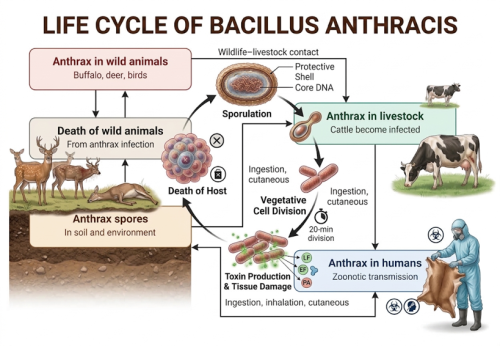
Graphic illustrating the life cycle of Bacillus anthracis generated with AI

Anthrax is the Greek word for ‘coal’ (or ‘charcoal’), and it already designated a black, coal-like form of pustule, ulcer or growth in the earliest surviving Greek medical writings (late 5th /early 4th cent. BCE), those that became attached to the name of the famous physician Hippocrates of Cos. Many of the terms for different kinds of swellings, blotches, lesions, and extrusions visible on the bodily surface were similarly borrowed from the objects they resembled, such as ‘honeycomb’ (kērion) or ‘hog’s back’ (choiras). The coal-like pustules (anthrakes) appear a few times in this kind of company, in lists with other types of growths and sores, and then take centre stage in opening Epidemics 2. ‘Anthrakes in Crannon (a city in Thessaly, northern Greece) in summer.’  It was hot and wet, with southerly winds. Ichorous swellings formed under the skin, became hot and itchy, and small blisters broke through the surface, as if from burns underneath.


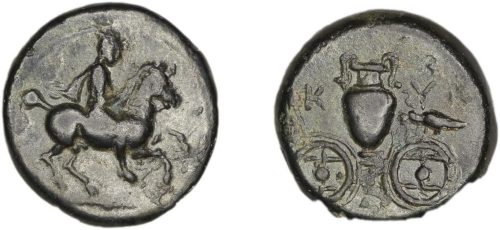
Copper alloy coin minted in Crannon Thessaly in the early 4th century BCE. Thessaly was famous for its horses and horsemen (BM no. 1844,0425.1811)

Writing over half a millennium later but very much in the same tradition, the preeminent physician of the Roman Empire, Galen of Pergamum (c129-205 CE), developed this idea of ‘anthrakes’  being produced by a kind of localised burning from fluxes, imbalances and putrefaction within. ‘As if boiling over’, blood burns through the skin, forming a black or ash coloured crust on an ulcerated area, surrounded by a larger inflamed zone and accompanied by fever (On Unnatural). The black colour, and the dangers posed by the disease, are a result of the involvement of black bile as well as blood (two of Galen’s four humours). The black bile was either part of the burning process from the beginning, or was generated through that burning, from the blood being over-cooked. Black bile is even more prominent in some of the other discussions of anthrax as a pustular condition in Galen’s works.

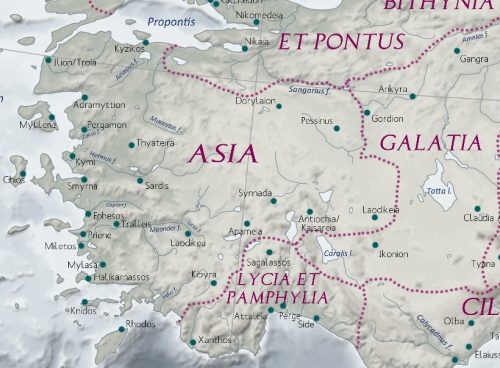
Galen also encountered an outbreak of anthrax in his home city when studying with the noted medical teacher Satyrus in the 140s CE, part of an epidemic which affected all the cities in the Roman province of Asia. The hot, black, scabby ulcers followed a wet, southerly wind, similar to the conditions described in the Hippocratic Epidemics 2. The Pergamene physician never mentioned any animal mortality in relation to anthrax, however, nor did any other ancient author, though modern anthrax outbreaks in humans depend on largescale livestock epidemics, and usually occur in conditions of war or other exigencies which compel people to consume contaminated meat, and otherwise get too close to diseased animals and animal products. Though pestilential events which did involve both humans and livestock are recorded from the ancient world, even in another city of Roman Asia—Smyrna—during Galen’s lifetime.

The cities of the Roman province of Asia

It is not just that Galen omits important aspects of modern anthrax epidemiology, at least in its largescale forms. He also emphasised symptoms which seem at odds with current descriptions. The outbreak in Pergamun aligns with the Hippocratic outbreak at Crannon, in Galen’s Hippocratic commentaries, for example, and serves an anatomical purpose when reported in his works on dissection. The disease stripped the skin and even the flesh off the parts of its sufferers, giving curious students such as himself a good view of what lay underneath. Indeed, Satyrus seems to have seized the teachable moment, asking patients to make various bodily movements so as to reveal to his class which muscles were involved, and even actively drawing the muscles aside in order to see a large artery, nerve or vein that would otherwise be obscured. Needless to say, this kind of surface and soft tissue loss does not feature in accounts of modern anthrax.

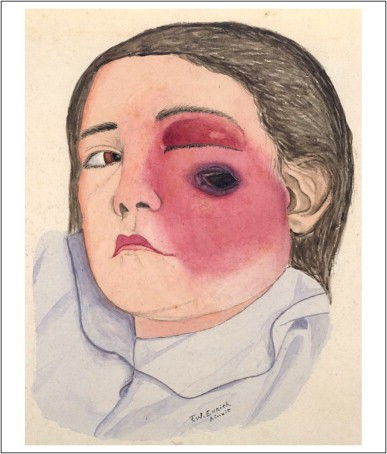
There are various approaches which can be taken to these different mismatches. On the one hand, there are good reasons to think that something like modern anthrax was present in the ancient mediterranean. The ecology of B. anthracis and its close bacterial relatives, some of which also produce the potent toxins which cause the disease symptoms, as well as the so far rather patchy genomic evidence, support that possibility. Galen would seem to confirm the picture. His anthrax most likely included, though was not restricted to, cases which would today be diagnosed as ‘cutaneous anthrax’, that is where spores get into a cut or scape on the skin when a person handles infected animals or contaminated animal products like wool or hides, and a characteristic black sore develops. It is even conceivable that the epidemic he witnessed in the cities of Asia was anthrax, perhaps caused by an earlier iteration of B. anthracis (or B. cereus), with more impact on soft tissues. The emergence of a fourth—injectional–form of modern anthrax, produced by injecting contaminated heroin (or other drugs) into muscles or veins, displays the necrotising potential of the bacterial toxins, that they can strip away flesh. Other interpretations are available, but at least some of the reported human and livestock epidemics were probably anthrax.

Untitled painting, signed ‘F.W. Eurich’ (c.1910). Frederick William Eurich was a Bradford based physician who made paintings based on photographs of some his patients, in this case a girl suffering from external anthrax.

Image from James F. Stark, ‘A poster of pustules: representations of early twentieth century industrial anthrax in Britain’, Endeavour 35 (2011), 23-30, (Figure 4: Courtesy of CHSTM, University of Manchester, Eurich Papers, uncatalogued).

On the other hand, the fact that, for Galen, anthrax was unrelated to animals makes a real difference to his understanding of the disease. For him, what was important was how anthrakes fit into a complex typology of pustules, sores and ulcers distinguished by an interplay between their humoral composition, and the external and internal conditions of their eruption. Conceptually, ancient and modern have very little in common, therefore, even if they may have concretely coincided on occasion.

This project is about embracing both approaches. We are curious about what modern diseases were present in the ancient Afro-Eurasian world, in whatever form, and we are interested in ancient ideas about illness, how different conditions were understood and responded to, what was important to Galen as well as what would be important to a modern healthcare professional. The two questions are not the same, but nor are they in contradiction, we want to promote dialogue between the two.


Rebecca Flemming, PI Pustules, Palaeogenetics and Pandemics, A.G. Leventis Chair in Ancient Greek Scientific and Technological Thought, University of Exeter

14 September 2026


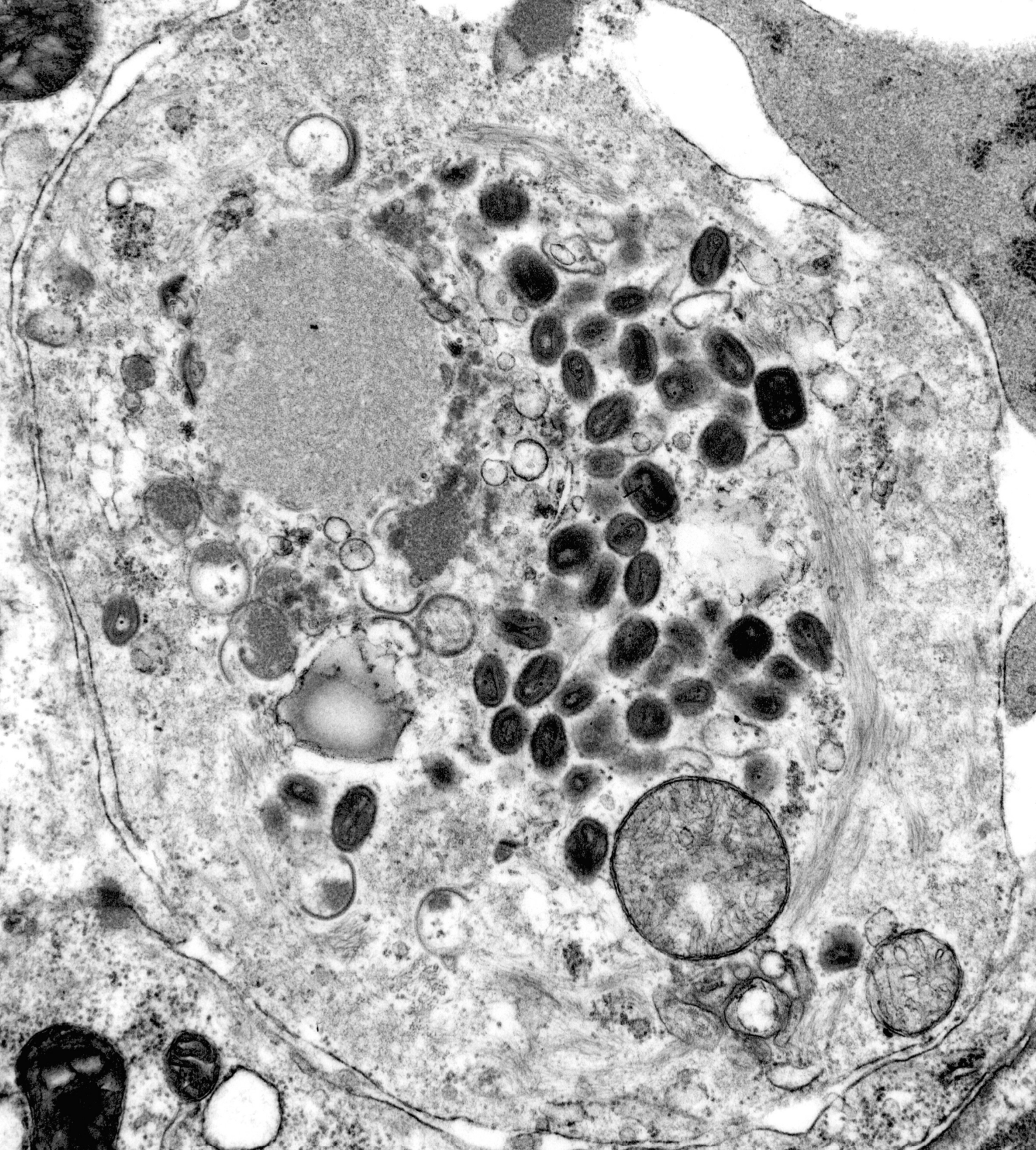
Photo credit: Micrograph of a Smallpox (Variola) virus from F. A. Murphy, University of Texas Medical Branch, Galveston, Texas.